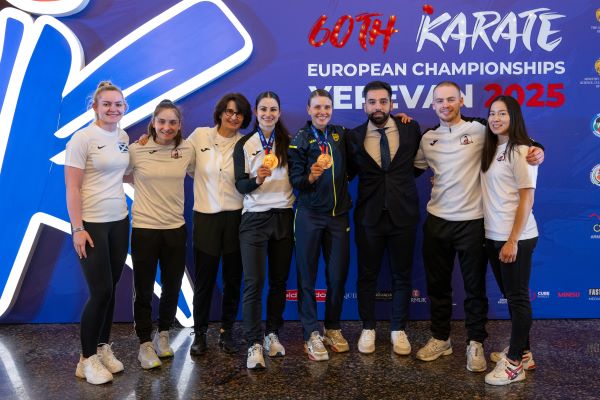
Master in Management, Karate, and International Ambitions. Why did Anna-Johanna Nilsson choose ESSEC?

12.1.2026

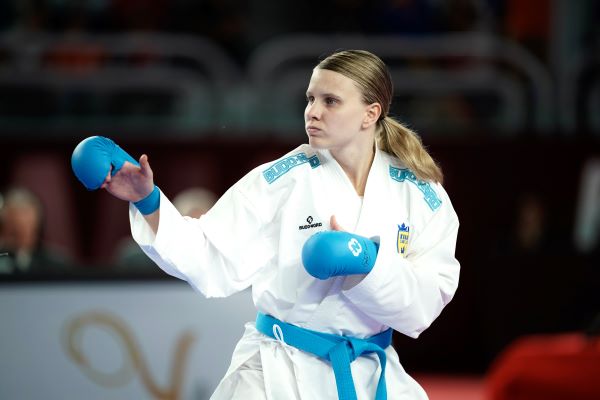
Anna-Johanna Nilsson is a professional karate athlete ranked Top 10 in the world. She chose ESSEC for her exchange semester. Between flights to Switzerland, demanding MiM courses, and preparation for the World Championships, she explains how the school became one of the few places where her two lives, sport and academics, can finally come together.


When Anna-Johanna thinks about her academic exchange, two ideas come to mind immediately. Going abroad. And Paris. ESSEC quickly feels like the right choice. Its international reputation. Its courses. Its support for athletes.

But there is also the advice she trusts the most. Her boyfriend, a former ESSEC student, tellsher, “They will understand what it means to be a professional athlete.” He was right.

For her, this semester is more than academics. It is a way to prove to herself that she can aim high, both in her studies and on the tatami. It is a choice made with her heart, but also a strategic step for her future.


Her schedule is a moving puzzle. Nothing is stable. Everything shifts. Competitions. Injuries. Last minute flights to Switzerland where she trains.

At ESSEC, she can takea breath of fresh air. An intensive seminar that frees up time. Five classes spread over two days. One online course for more flexibility.

She buildsthis rhythm so she can keep training twice a day. ESSEC offers a level of flexibility that makes it possible to manage both lives at once.

Since September, she has already flown to Switzerland almost seven times.

“I leave on Wednesday morning. I come back on Friday or Sunday. It depends.”

She smiles. Tired sometimes. Always determined.


ESSEC offers her more than just a flexible schedule. The MiM program has the same level of discipline she’s familiar with  from sport. Learn. Improve. Perform. This speaks to her.

She enjoys learning in a new way. She likes being in an international environment where every course shifts her perspective.

At her home university, students follow the same classes for more than a year. It naturally creates strong and stable bonds. At ESSEC, everything moves faster. Groups change. Interactions are brief. Building relationships takes effort from both sides. It can be difficult when you only see each other once a week.

“Swedish students are often more reserved. I know it can make things less spontaneous.”

She adapts, as she always does.


At ESSEC, she discovers a mosaic of cultures and personalities. It is a diverse, open, and inspiring environment.

But it feels very different from the international karate circuit where the same athletes meet year after year.

There, people know each other. They reconnect.

Here, everything has to be built from the start.

This is also what an exchange is. Learning to reinvent yourself.


“We often give up because something feels too hard in the moment. But when you have a plan and a vision, you keep going.”

Her words ring true. Karate taught her persistence. ESSEC gives her a new space to channel it.

Two worlds. One same level of rigor.


In Sweden, studying is natural. A cultural norm.

For Anna-Johanna, it has become a choice. A way to remember she is not just an athlete. She has other ambitions. Maybe in France. Maybe elsewhere.

The Master in Management is a passport. A door that opens to new possibilities.


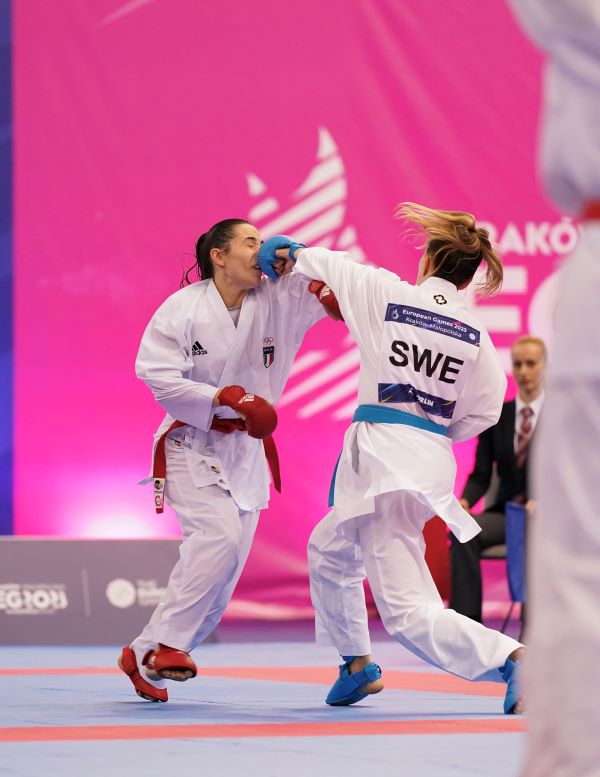
As a member of the Swedish national team, she competes on the world’s biggest stages. Karate Premier League. European Championships. World Championships.

She is the only Swedish athlete to reach a Premier League final and to qualify for the 2022 World Games and the 2023 European Games.

She knows her worth. She also knows what she cannot control.

“We only control the effort. Never the result.”

For the World Championships, she moves forward with calm and focus. Point by point. With confidence and clarity.


Her future moves at two speeds. One year at a time for sport. A long-term dream of becoming World Champion.

She stays flexible. Injuries. Opportunities. Unexpected paths.

She is 27. Most high-level athletes retire around 35. She still has a few years of competition ahead. And another life already taking shape behind it.


enlighten-lead-change
Loading...